What Are Renovation Probes, and Why Do They Matter?
TLDR: Home remodels always have renovation surprises in the walls (a plumbing riser where you don’t want it, unexpected structural supports, & MacGyver ’ed DIY fixes can hide back there). But they don’t have to be construction-phase emergencies. Running targeted probes during schematic design finds problems early when they’re cheap to solve.
What Are Renovation Probes?
Every time you do a renovation, there are surprises in the wall. In the Modern Nostalgia project, one of our probes found a row of gas lines side by side; one for every floor of the apartment building. It immediately changed how we designed that wall. Sometimes we find the plumbing lines did some zigging and zagging and were not where we expected.
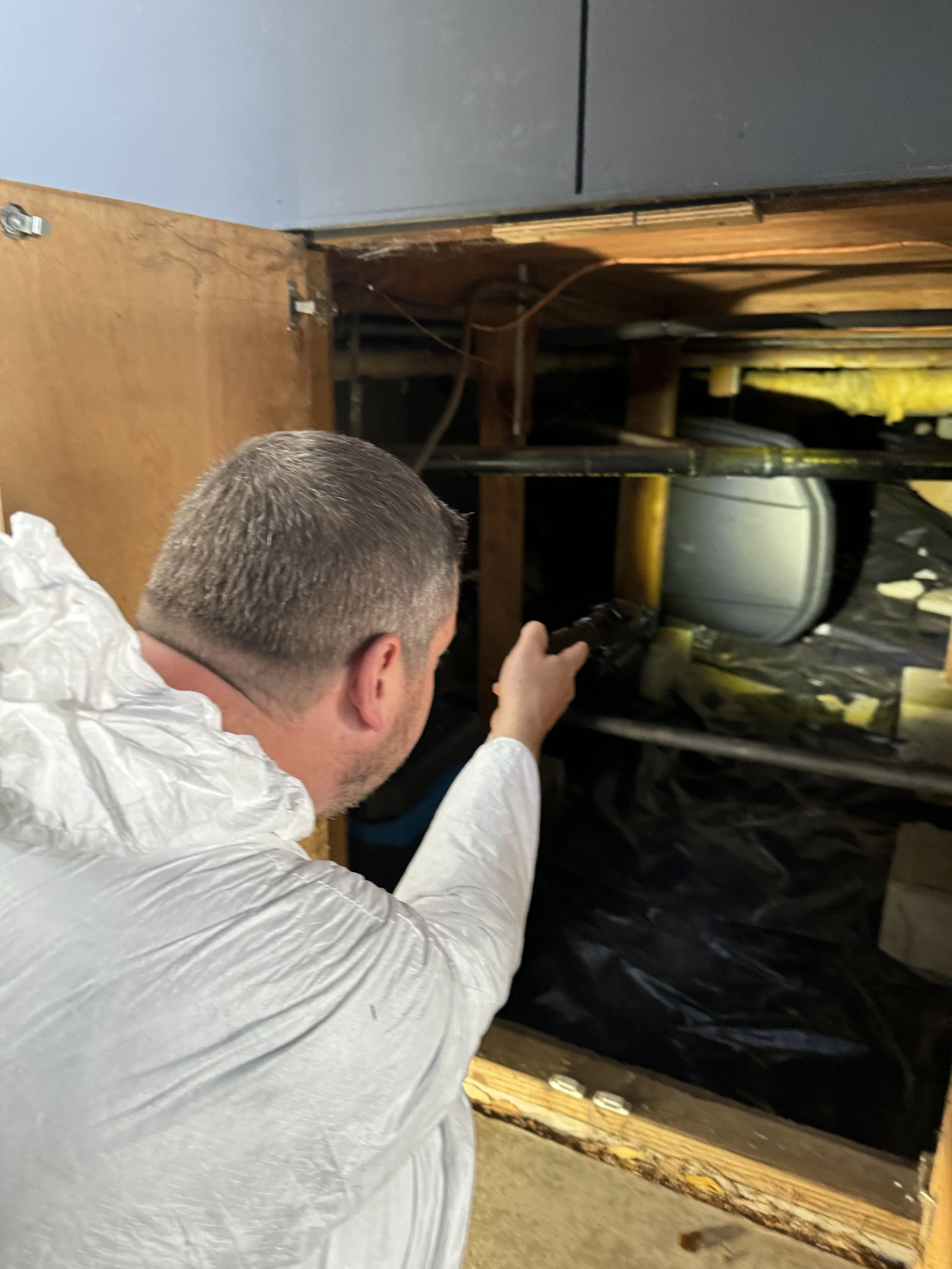
Probing under a University Place house
Builder, architect, and client all crawled together in this crawl space and even had an impromptu design conversation under there. Not typical, but eye opening.
Finding Opportunities
They’re not all bad surprises, probes in the Nomadic Nest project found a heaping of extra ceiling height that we used to our advantage to design a wide ‘aperture’ skylight that brought in more sunlight than we could have done otherwise, with plenty of time to design it right because we did probes early.
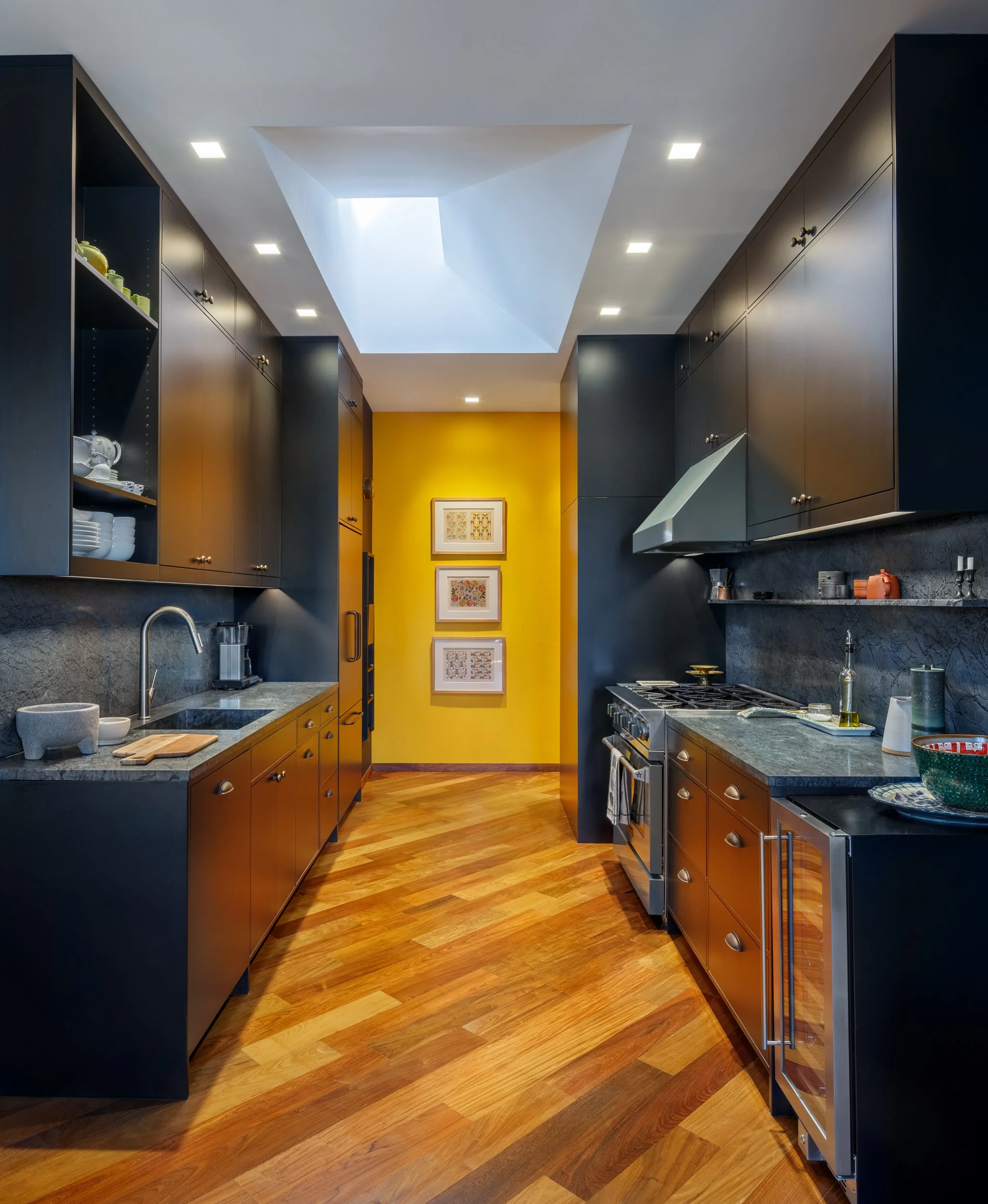
Nomadic Nest Skylight
During probes, we found a boatload of space between the ceiling and roof, and used it to create a tapered skylight ‘aperture’ to bring light further into the home.
How Does a Probe Work?
During schematic design, once we have a layout that we like, there are key spots where we have to make sure there’s no plumbing risers or structural elements or other surprises lurking back there. We don’t wait until construction starts to find that out. It’s for the birds.
We go in with your builder, who’s chosen because we’ve built a team (see Process). I target key spaces and key places to check. We find out early if the design needs to adapt. That’s how we reduce risk.
“Going in” with a targeted, surgical approach means making strategic holes in walls, ceilings, and floors in key spots that’ll inform our design. The surgical approach is important. If you wait till demolition, you’d be knocking down walls nilly willy and seeing more clearly what is where, but you wouldn’t want to live in a demolition zone, would you? With a builder on the team, they are able, willing, and incentivized to make holes AND patch them on what otherwise would be a small tedious ‘handyman’ diversion.
Why the Builder Has to Be There
My expertise is identifying exactly what needs probing. I understand what the design needs to make it feel the way we intend, and can see when knocking down a wall could be a big question mark. But you don’t want me cutting holes in your house. A builder will have all the tools and know-how needed to get the job done.
What This Doesn’t Cover
There can still be surprises. It doesn’t 100% eliminate them. You can’t open every wall in a house that you’re still occupying. But it drastically reduces surprises that a design professional can spot, buying us time to adapt to what we find to make the design better, and reduce construction delays before they begin.
Think of it as targeted due diligence. You’re buying information in the places where it matters most.
Does your current renovation plan include time to check what's actually in those walls before locking in the design?