Whether you're buying waterfront land or expanding an existing home, the first question isn't "What should it look like?"—it's "Can we actually do this?"
Site Validation Report:
Know What's Possible Before You Commit
Renovation/Addition Site Validation: $3,500
New Construction Site Validation: $7,500
Timeline: 2 weeks
Deliverables:
✓ Comprehensive Site Validation Report (PDF)
✓ Whole-project budget spreadsheet
✓ 1-on-1 meeting to walk through it together
[See exactly what's inside the report ↓]
Not sure yet? Start with a free 15-minute conversation about your property, your questions, and whether we're a good fit — no report required. Bring what you've got, and if a partner's part of the decision, they'll need to be on the call too.
This is a standalone report, not a design contract. It's yours to keep whether you hire us afterward or not.
Validate Your Vision Before You Spend
Buying waterfront property or planning a major addition to your existing home is a high-stakes investment. Before you pay $30K for architectural drawings (or tie up resources on a piece of land), you need to answer three critical questions:
Can we build it? What do regulations actually allow?
Should we build it? Does the site support what we're imagining?
Will it work for us? Does this align with our budget and lifestyle goals?
A Site Validation Report surfaces deal-breakers before you're financially committed—so every dollar you spend after that is based on reality, not assumptions.
Why Site Validation Comes First
Scenario 1: Avoided Disaster (New Construction)
A couple fell in love with a waterfront lot listed at $450K. It had gorgeous views and was in the perfect location. They were ready to close.
We ran a Site Validation Report first. Discovered: 75-foot shoreline setback, shared road easement blocking rear expansion, Critical Area wetland buffer on one side. The buildable envelope was 40% smaller than they assumed and the septic system wouldn't fit where they imagined.
Result: They didn't buy the lot. Saved $450K + years of frustration.
Scenario 2: Unlocked Hidden Potential (Renovation)
A homeowner wanted to expand their A-frame cabin but assumed they'd have to build outward, which would trigger new setback requirements and potentially void their grandfathered shoreline status. They were prepared to abandon the project.
Site Validation revealed: They could expand within the existing footprint by reconfiguring interior space AND add an ADU over the garage under new county ordinances. The aquifer recharge restrictions—which looked like a deal-breaker on paper—didn't apply to additions under 2,500 SF according to county engineers.
Result: What seemed impossible became buildable. They moved forward confidently with a phased plan that preserved grandfathered status and stayed within budget.
“There are too many instances of projects beginning and then coming to a halt with unexpected expenses because the original plan won’t work — zoning, permitting, or a layout that just doesn’t fit the way it did on paper. Andrew created a quick blueprint of our home to see if our space could be rearranged to fit our needs, or if we needed to expand to get there.”
What you receive
Your Site Validation Report is a comprehensive document that gives you clarity on regulations, site constraints, design opportunities, and realistic costs - before you commit to design or construction.
“We don’t just pull data—we talk directly to county planners and engineers to understand how regulations are actually applied in practice.”


FOR RENOVATION & ADDITION SITE VALIDATION ($3,500)
-
Before we analyze regulations or constraints, we analyze you.
Using the Six Thinking Hats methodology, we conduct a structured interview that uncovers:
White Hat (Facts): How you actually use the space, adjacencies that matter, functional requirements
Black Hat (Risks): What doesn't work now, what you want to avoid, financial constraints
Yellow Hat (Optimism): What you love about the property, what excites you about the project
Green Hat (Creativity): Emotional drivers, aesthetic preferences, inspiration sources
Red Hat (Feelings): What success feels like at the end
Blue Hat (Summary): Your priorities synthesized into clear design drivers
The deliverable: A visual mind map and narrative summary that captures your priorities with weighted percentages.
Example from recent project:
Janice: Functionality 45% (storage, organization, practicality) | Clarity 35% (a plan you can trust without surprises) | Comfort 20% (elegant spaces with light and flow)
Ed: Emotion 40% (soul and story, design rooted in feeling) | Aesthetics 35% (beauty, cohesion, lived-in elegance) | Organization 25% (practical clarity for cooking and hosting)
Why this matters: Every constraint we identify and every design opportunity we suggest is filtered through these priorities. We're not just asking "Can we expand?"—we're asking "Can we expand in a way that delivers what Janice and Ed actually care about?"
This ensures the Site Validation Report isn't just a technical document—it's strategic guidance aligned with how you want to live.
-
We translate the mind map into a written narrative:
Where We Are Now: What's not working currently
Your Problem Is: The core issue (layout, light, flow, outdated systems)
Highest Priority: The one thing that must be solved
What the Ideal Solution Includes: Specific outcomes that define success
Example from recent project: "Your A-frame is full of character and faces a gorgeous view of the Puget Sound, but hemmed in by small, dark rooms that don't match how you want to live. The kitchen feels cut off, bedrooms are tight, and the best parts of the house aren't getting the attention they deserve."
-
We audit your property against all applicable codes and restrictions:
Zoning district and permitted uses
Setback requirements (front, side, rear, easements)
Lot coverage calculations (existing vs. allowable)
Height restrictions and how they're measured
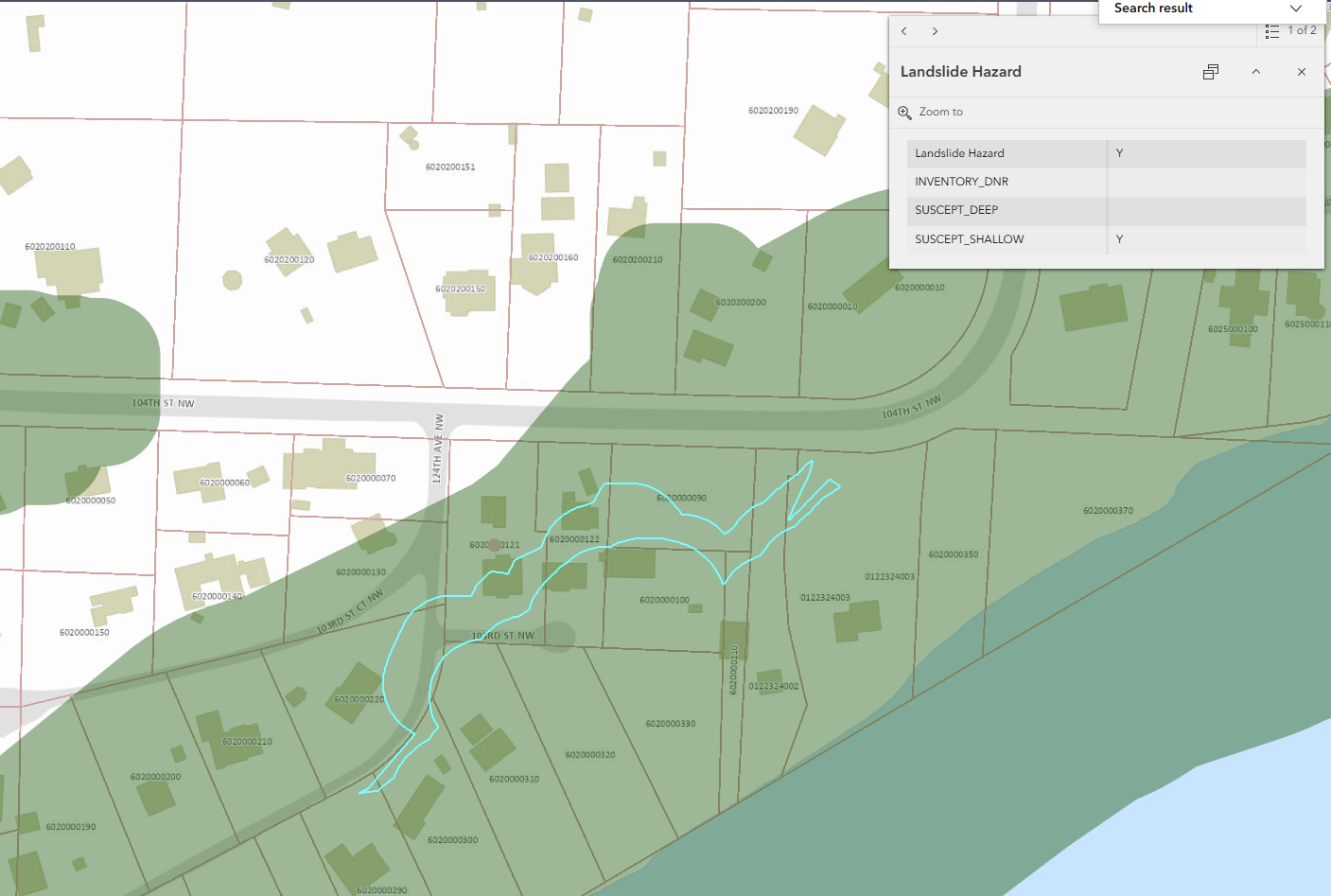
Critical Area designations (aquifer recharge, landslide hazard, wetlands, erosion)
ADU regulations (if applicable—new ordinances often unlock possibilities)
HOA restrictions (if any)
Traffic impact fees and other development costs
We don't just pull data—we talk directly to county planners and engineers to understand how regulations are actually applied in practice.
-
We analyze what you're working with:
Current square footage breakdown (house, garage, decks, etc.)
Grandfathered elements and how to preserve them
Septic system location and capacity
Utility access (water, electric, propane feasibility)
Structural considerations for expansion
-
We identify specific opportunities and constraints for each goal:
Example priorities: Lighten dark interior, expand bedrooms, create flowing indoor/outdoor spaces, relocate kitchen, add ADU, improve entry sequence
For each item: feasibility assessment and rough cost range
Strategic options (e.g., "expand within footprint vs. add laterally")
-
Visual documentation to help you understand constraints and opportunities at a glance:
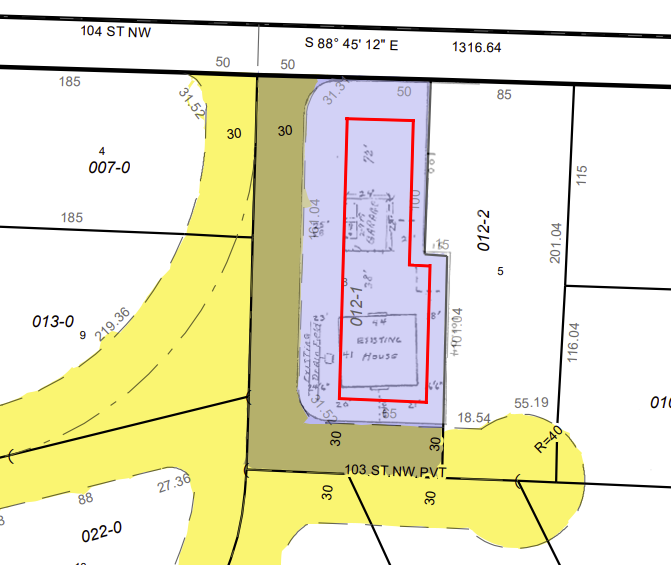
Property boundary and setback overlay
We create annotated diagrams showing:Property lines and dimensions
Required setbacks (front, side, rear, shoreline) marked and dimensioned
Easements and right-of-way areas
Buildable envelope (the "box" where construction is allowed)
Note: We work with GIS mapping data from the county or surveys you provide. If you have an existing property survey, we'll use that as the base—it provides the most accurate results. If you don't have a survey, we can work with county GIS data, but we'll note where a professional survey would increase precision.
Critical Area mapping
If your property is flagged for Critical Areas (wetlands, steep slopes, aquifer recharge, landslide hazard), we overlay those restrictions on the property diagram so you can see:Where buffers apply
How much of your lot is actually usable
Whether your proposed improvements fall inside or outside restricted zones
Existing conditions plan (for renovations)
Current structure footprint
Existing decks, driveways, and impervious surfaces
Septic system location and reserve area
Lot coverage calculation (existing vs. allowable)
Buildable envelope options (when applicable)
If multiple siting strategies are possible (expand up vs. out, ADU location options, phased additions), we sketch those options on the diagram so you can compare tradeoffs visually. -
Current cost-per-square-foot ranges based on:
Local labor and material costs
Project complexity (renovations typically cost more per SF than new construction)
Custom finishes vs. standard builder-grade
Example: Interior kitchen relocation and expansion: $250K-$350K | ADU over garage (672 SF): $235K-$470K depending on finish level
-
Which agencies are involved (County Planning, Department of Ecology, Health Department)
What approvals are required (standard vs. Critical Area review)
Estimated timeline from application to permit approval
Required consultants (civil engineer, geotechnical engineer, septic designer)
-
Who you'll need to hire and when:
Structural engineer
Civil engineer
Geotechnical engineer
Septic designer
General contractor
Survey requirements
-
Our professional opinion on:
What's realistically achievable within your budget
Which improvements should be prioritized vs. phased
Permitting strategy (standard review vs. Critical Area evaluation)
When to bring in contractors for refined pricing
Whether to proceed to design phase—and what that includes
FOR NEW CONSTRUCTION SITE VALIDATION ($7,500)
Includes everything in Renovation/Addition validation, PLUS:
-
Comprehensive analysis before you close on land:
Is the lot actually buildable for your intended use?
Are utilities accessible and adequate?
What are the hidden costs (impact fees, utility connections, septic installation)?
-
Sun path and solar exposure throughout the year
Topography and grading challenges
View corridors and privacy considerations
Wind/weather patterns
Geotechnical considerations (soil type, drainage, slope stability)
-
Mapping of where a structure can legally go:
Maximum footprint and height
Realistic square footage potential
Multiple siting options if the property allows
Driveway/access logistics
-
Construction cost range (Low/High) based on:
Feasible design scope
Site complexity (grading, utilities, access)
Local market conditions
This allows you to test your budget against reality before committing to land purchase.
Pre-Application Screenings Are a Good Start. Here's What They Don't Cover.
Pierce County and Tacoma now offer pre-application screening, and they're worth doing at the right time. County planners are knowledgeable, and knowing the rules before you start is better than learning them during permitting.
I recommend doing the Pre-application meeting after the Site Validation because then I can come to them with very pointed questions that you’d wish you knew to ask.
But a pre-app meeting answers the questions you ask. They will run down their checklist but it leaves a lot unanswered. A Site Validation Report answers the questions you didn't know to ask.
Beyond Feasibility Studies
Most feasibility studies pull data from GIS maps and call it a day. We go further.
We talk to county planners and engineers directly. In a recent project, online maps showed aquifer recharge restrictions that would have killed an addition. A conversation with the county engineer revealed: additions under 2,500 SF are exempt, and the site's sandy soil provides excellent infiltration. Project saved.
We don't just identify constraints; we find opportunities. New ADU ordinances. Grandfathered status you didn't know you could preserve. Density bonuses. Height exceptions. We look for the "hidden square footage" and strategic workarounds that less experienced architects miss.
We test ideas in context. We don't just tell you what's legal—we sketch conceptual options so you can see how regulations translate into actual space. You'll understand not just what you can build, but where and how.
We give you cost reality early. Construction costs have increased 37% over the past four years. Materials, labor, and permitting fees all compound. We provide realistic cost ranges based on current market conditions—so you're not blindsided later.
You Need Site Validation If:
For New Construction:
✓ You're considering buying waterfront land and want to know what's buildable before you close
✓ You've found a lot but aren't sure if it can support the size/style of home you're imagining
✓ You've heard waterfront regulations are "complicated" and want an expert to decode them
✓ You want to understand realistic costs before committing to a purchase
✓ The lot has Critical Area flags (wetlands, steep slopes, shoreline buffers) and you need to know if it's a deal-breaker
For Renovations/Additions:
✓ You own a cabin or home and want to expand—but aren't sure what setbacks/lot coverage will allow
✓ You're worried about spending $30K on plans that can't be permitted
✓ You want to know if you can expand within your footprint vs. building outward
✓ You're concerned about losing grandfathered status if you change anything
✓ You're considering adding an ADU but don't know if it's feasible on your lot
✓ Your property has easements, HOA restrictions, or Critical Area designations that might limit options
This Report Belongs to You
The Site Validation Report isn't contingent on hiring us for the full architectural project.
Some clients use it to move forward with us into design. Others use it to have better conversations with design-build firms or contractors. Some sit on it for six months while they finalize financing or wait for the right moment.
That's fine. The goal isn't to lock you in—it's to give you clarity so your next decision is informed, not a gamble.
If you do move forward into design with us, here's what that looks like:
What You Get in the Design Phase
1. A Precise Starting Point
We measure and model your existing house (or proposed site). You'll see your home as it is now in a smart 3D Building Information Model that becomes the backbone of the entire project.
2. Ideas That Build Toward Reality
We don't just sketch on paper—we build directly in a 3D model. That continuity means:
Every option we explore is technically grounded
Changes update everywhere automatically
Nothing is lost in translation between "concept" and "construction"
3. Seeing, Not Guessing
Flat plans don't tell you what it feels like to walk through a space. With the 3D model, you'll experience:
Video walkthroughs that let you virtually "tour" your future home
Sunlight studies showing how rooms brighten throughout the day and seasons
Material swaps to test finishes and colors in real time
4. The Pre-Construction Cost Audit
Once we've explored promising directions, we stop and bring in a builder to reality-check cost and feasibility. This happens before we refine details—avoiding wasted time and keeping budget alignment central.
5. Refinement With Confidence
Using your feedback and the builder's input, we refine the design. Because we're already working in a construction-ready model, refinements flow directly into scaled plans and renderings.
6. A Clear Roadmap Forward
By the end of the Design Phase, you'll have:
A refined design you trust
Visuals and walkthroughs that let you experience the home before it's built
Builder feedback on costs and phasing
Confidence that the next investment (Construction Documents, Permitting, Construction Administration) builds on a solid foundation
Flexibility to phase the project intelligently
WHAT SETS US APART

This isn’t a zoning check. It’s an architect-led validation of whether your project can actually be built—before you commit real money.
What You Get vs. What a Pre-Application Meeting Provides
What You Need to Know |
Pre-Application Meeting |
Site Validation Report |
|---|---|---|
| Can I build on this lot? | ✓ Tells you the zone district | ✓ Tells you exactly what's buildable (footprint, height, sq ft) with site-specific diagrams |
| What are the setbacks? | ✓ Lists setback numbers from code | ✓ Maps setbacks on YOUR property survey and shows the buildable envelope |
| Are there Critical Areas? | ✓ Flags if property is in a Critical Area | ✓ Researches specific restrictions, talks to county engineers, and determines exemption status |
| Can I add an ADU? | ✓ Says "ADUs allowed" or "not allowed" | ✓ Determines feasibility on YOUR lot (setbacks, septic, coverage) and identifies optimal location |
| What will this cost? | ✗ Not included | ✓ Provides construction cost ranges based on current market conditions and complexity |
| What's the permitting path? | ✓ Outlines general process | ✓ Outlines involved agencies, required approvals, and estimated timeline |
| Can I expand my footprint? | ✗ Not addressed | ✓ Analyzes if interior reconfiguration + vertical expansion avoids triggering new setbacks |
| Will I lose grandfathered status? | ✗ Not addressed | ✓ Identifies what's grandfathered and how to preserve it (or when it's worth giving up) |
| What about septic capacity? | ✗ Not included | ✓ Reviews existing septic location, capacity, and reserve area—flags if new system is needed |
| Do easements limit building? | ✓ Notes if easements exist | ✓ Maps easements on survey and explains how they restrict building location and access |
| What's the best design strategy? | ✗ Not included | ✓ Sketches 2–3 conceptual options showing tradeoffs (cost, permitting, livability) |
| Can I phase the project? | ✗ Not addressed | ✓ Identifies which improvements can be phased and how Phase 1 decisions affect Phase 2 |
| What are the deal-breakers? | ✗ You have to interpret raw data | ✓ Clear Go/No-Go recommendation with professional opinion on highest and best use |
| How do I move forward? | ✗ Ends after data dump | ✓ Includes next steps: design phase overview, contractor timing, permitting strategy |
The Difference
A Pre-Application Meeting tells you the rules.
Site Validation tells you what's possible within the rules—and whether it's worth pursuing.
Most feasibility work gives you data and leaves you to figure out what it means.
Site Validation gives you:
Data interpreted through your priorities
Costs estimated based on current market conditions
Options mapped with pros and cons
A clear recommendation on whether to proceed
Think of it this way:
If a zoning check is a list of ingredients, Site Validation is the recipe—showing you how everything works together and whether the final dish is worth making.
Your Questions, Answered
-
You can—and you should. County staff are helpful and knowledgeable.
But here's what usually happens: You ask a specific question, you get a specific answer. You ask about setbacks, they tell you the setbacks. You ask about lot coverage, they tell you the percentage.
What you don't get is:
How all those regulations interact with each other
What happens when your property has multiple overlapping restrictions
Creative solutions or workarounds that experienced architects know to ask about
The difference between what the code says and how it's actually applied in practice
Cost implications of different regulatory paths
Example from a recent project:
Online GIS maps showed aquifer recharge restrictions that would have limited additions to 500 SF. The homeowner assumed the project was dead.We called the county engineer directly and learned: additions between 500-2,500 SF require an abbreviated site development plan but are NOT held to the 10% impervious surface limit. The sandy soil on this specific property provided excellent infiltration. Project unlocked.
That conversation happened because we knew what to ask and who to ask—not just "what are the rules?"
A Site Validation Report synthesizes all those conversations, codes, and constraints into a single coherent picture of what's possible.
-
Contractors are excellent at building, but most don't specialize in navigating complex zoning, shoreline regulations, or Critical Area ordinances.
Contractors call me to help them with these same issues.
Here's the typical sequence if you start with a contractor:
You describe what you want
They give you a rough price based on square footage
You get excited and commit
They discover regulatory issues during permitting
Design has to change - or worse, the permit gets rejected
Costs escalate, timeline extends, frustration mounts
The issue: Contractors price what you describe, not what's actually permissible. And most aren't trained to decode setback calculations, daylight plane restrictions, or how grandfathered status works.
A Site Validation Report happens before you talk to contractors, so when you do get bids, everyone is pricing the same buildable scope.
-
For existing properties: Not required, but extremely helpful.
If you have a property survey, that's the most accurate foundation for the report. We'll use it to precisely map setbacks, easements, and buildable areas.
If you don't have a survey, we can work with:
County GIS mapping data (property lines, parcel dimensions, easements)
Tax assessor records
Aerial imagery
What's the difference?
GIS data is usually accurate within a few feet—which is fine for preliminary validation. But if your project pushes close to setback limits or involves complex easements, a professional survey ($800-$2,000) provides legal-grade accuracy.Our recommendation:
Start with GIS data for validation. If the report shows your project is feasible and you decide to move forward, get a survey before the design phase. That way, you're not paying for a survey on a property that might not work for your goals.For land purchases: Yes—you'll want a survey as part of your due diligence anyway. Most sellers provide a recent survey, or you can order one as a contingency before closing.
Bottom line: We can provide valuable validation either way—but we'll note in the report where a survey would increase precision or is required before permitting.
-
That's exactly the point.
Would you rather spend $3,500 now and discover a deal-breaker or spend $30,000 on architectural plans (or tie up $450,000 on land) and discover it later?
Recent example:
A couple was ready to close on a waterfront lot. We ran Site Validation first. Discovered: the buildable envelope was 40% smaller than they assumed due to setbacks and a wetland buffer. The septic system wouldn't fit in the reserve area.They walked away. Saved $450K.
That's not a failed report—that's a successful one. It did exactly what it was supposed to do: prevent an expensive mistake.
Here's the other scenario:
Most of the time, Site Validation unlocks possibilities you didn't know existed. New ADU ordinances. Vertical expansion that preserves grandfathered status. Density bonuses. Height exceptions.We're not looking for reasons to say no. We're looking for creative ways to say yes while staying within regulations.
-
Yes. Especially if you're planning a major addition or worried about permitting.
Here's why:
Even if you own the land, you don't know:Whether your proposed addition will trigger new setback requirements
If expanding will void your grandfathered shoreline status
How much square footage you can actually add within lot coverage limits
Whether Critical Area restrictions apply to your specific type of improvement
If new ADU ordinances make a garage conversion feasible
Example:
A homeowner owned an A-frame cabin for 10 years. Wanted to expand by 1,200 SF. Assumed they'd have to build outward—which would have triggered new setback compliance and potentially lost grandfathered status.Site Validation revealed: They could reconfigure interior space within the existing footprint AND add an ADU over the garage under new county rules. What seemed impossible became buildable.
If you already own the property, Site Validation tells you the best way to expand—not just a way.
-
It's the same work—we've just made it available as a standalone service.
Here's why that matters:
Most architects bundle feasibility into the full design contract. That means:
You have to commit to the full relationship before understanding if the project is even viable
You're paying for design work that might be based on incorrect assumptions
If you discover deal-breakers, you've already invested significant time and money
We separated it because clarity should come before commitment.
If you move forward with us into design:
The Site Validation Report becomes the foundation. We're not starting from scratch—we're building on validated information. That makes the design phase faster and more confident.If you don't move forward with us:
The report still has value. You can use it to:Make a more informed decision about whether to proceed
Have better conversations with design-build firms
Negotiate land purchases with realistic expectations
Plan phasing and budgeting over multiple years
-
We document the regulations as they exist on the date the report is prepared.
For most projects: Regulations don't change significantly within 6-12 months. The report remains accurate for the typical timeline from validation to permit application.
If your timeline extends beyond a year: We recommend a quick regulatory update call with the county before you submit permits just to confirm nothing has changed.
What DOES change frequently: Local interpretations and new ordinances that expand possibilities (like recent ADU rule changes). We monitor these actively and will flag opportunities if they emerge.
The bigger risk isn't that regulations will change—it's that you'll design without understanding the regulations that already exist.
-
Yes—and many clients do exactly that.
Lenders want to know:
Is the project feasible?
What are the realistic costs?
What are the regulatory risks?
A Site Validation Report provides professional documentation that:
The property can support the proposed scope
Costs have been estimated by a licensed architect
Permitting pathways are understood
This is especially valuable for construction loans or home equity lines of credit, where lenders need assurance that the project won't stall halfway through.
-
We'll identify that in the report—and outline the process.
Here's what that means:
If your project requires a variance (e.g., to exceed height limits or encroach on setbacks), the Site Validation Report will:
Explain what type of variance is needed
Outline the approval process (typically requires a public hearing)
Estimate timeline and costs
Assess likelihood of approval based on local precedent
Suggest alternative design strategies that might avoid the variance altogether
The goal: Give you enough information to decide if pursuing a variance is worth it—before you invest in full design.
-
Regulatory information: 6-12 months (most zoning codes don't change frequently)
Cost estimates: 3-6 months (construction costs fluctuate with market conditions)
Site conditions: Indefinitely (unless something physically changes i.e.. new easements, tree removal, grading, etc.)
If your timeline extends beyond a year, we recommend a brief update consultation before moving to design or permitting just to confirm nothing has shifted.
-
Absolutely. The report belongs to you.
If you're interviewing architects, having a Site Validation Report before those conversations makes you a more informed buyer. You'll be able to:
Ask better questions
Evaluate whether architects understand the specific constraints of your property
Compare how different architects would approach the same validated conditions
-
That depends on what you mean by "don't like."
If the report says the project isn't feasible as imagined:
We'll outline why—and suggest alternatives. Sometimes the answer isn't "no," it's "not that way, but this way instead."If you disagree with our interpretation of regulations:
We provide documentation of our sources (code sections, conversations with county staff, GIS data). You're welcome to verify independently or get a second opinion.If you're disappointed by cost estimates:
We provide ranges, not fixed bids. The goal is to give you realistic expectations early—so you can adjust scope, timeline, or budget before committing to design.The report isn't an opinion—it's information. What you do with that information is entirely up to you.
-
Renovation/Addition validation ($3,500) works with an existing structure and known conditions. We're analyzing:
What you have now
How you can expand within current regulations
Whether grandfathered status can be preserved
New Construction validation ($7,500) starts with raw land and includes:
Environmental analysis (sun path, topography, drainage)
Geotechnical considerations (soil type, slope stability)
Multiple siting options (where on the property should the house go?)
Utility feasibility (water, sewer, electric—are they accessible and adequate?)
Pre-purchase due diligence (is this lot worth buying in the first place?)
The additional scope requires more research, more site analysis, and more strategic thinking—which is reflected in the investment.
-
The report includes one 30-minute follow-up consultation (phone or video) where I present findings and answer questions.
If you need additional consultations beyond that (e.g., to discuss design strategies or phasing options), we offer those at an hourly rate or you can transition directly into the Design Phase if you're ready to move forward.
Ready to get clarity?
The first step isn't hiring an architect for the full project. It's understanding what's actually possible.
If you're considering buying waterfront property—or expanding an existing home—a Site Validation Report gives you the information you need to move forward confidently (or walk away before you're in too deep).
We'll discuss your property, answer your initial questions, and determine if a Site Validation Report makes sense for your situation. No pressure. Just clarity.
Your Site Validation Report includes:
✓ Project narrative documenting your goals and priorities
✓ Regulatory deep-dive with zoning, setbacks, Critical Areas, and ADU feasibility
✓ Existing conditions assessment (for renovations)
✓ Breakdown of potential improvements with cost ranges
✓ Site diagrams showing buildable envelope and constraints
✓ Construction cost reality check based on current market conditions
✓ Go/No-Go recommendation and next steps
TIMELINE: 2 weeks
FORMAT: Comprehensive PDF report (typically 25-30 pages)
OUTCOME: Clarity before commitment