Your Kitchen Should Work for Your Life. Not Against It.
Most kitchen remodels
Most kitchen remodels start with cabinet samples and countertop finishes. That's fine…eventually. But the decisions that actually shape how you'll live in that kitchen come earlier, and they're the ones most homeowners don't know to make until they're already in the middle of construction. I’m not saying don’t save your favorite furniture, just don’t buy them till you have a design in place where it all works together.
I work with homeowners in University Place, Fox Island, Gig Harbor, and the South Sound who want a kitchen that functions the way they actually live and not just one that photographs well. The process starts with understanding what's broken before we talk about what's beautif
“The wall wasn’t just blocking the view.
It was blocking how they talked to each other.”
When a Wall Is Costing You More Than Space
A family in University Place came to me with a home that had water views toward Fox Island. The views were there. The kitchen wasn't taking advantage of any of it.
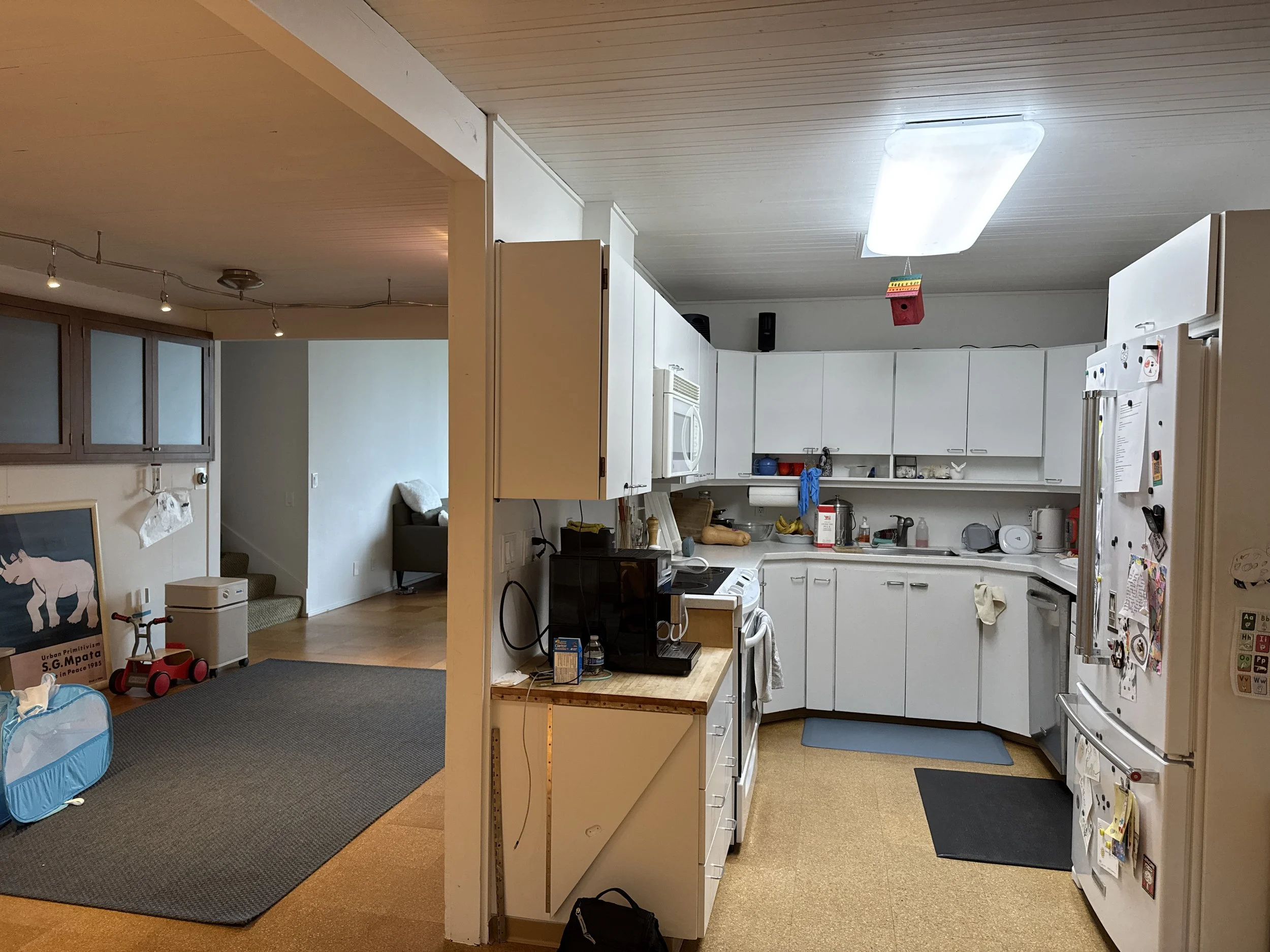
The layout had the kitchen tucked away. Totally isolated from where the family actually spent their time. Whoever was cooking was cut off. Conversations happened in fragments. The kitchen was functional in the narrowest sense: food got made. But the rest of life happening in that house was happening around the kitchen, not with it. And they weren’t just cut off from each other, but also from daylight, which also needed a few changes to capitalize on.
What We Did
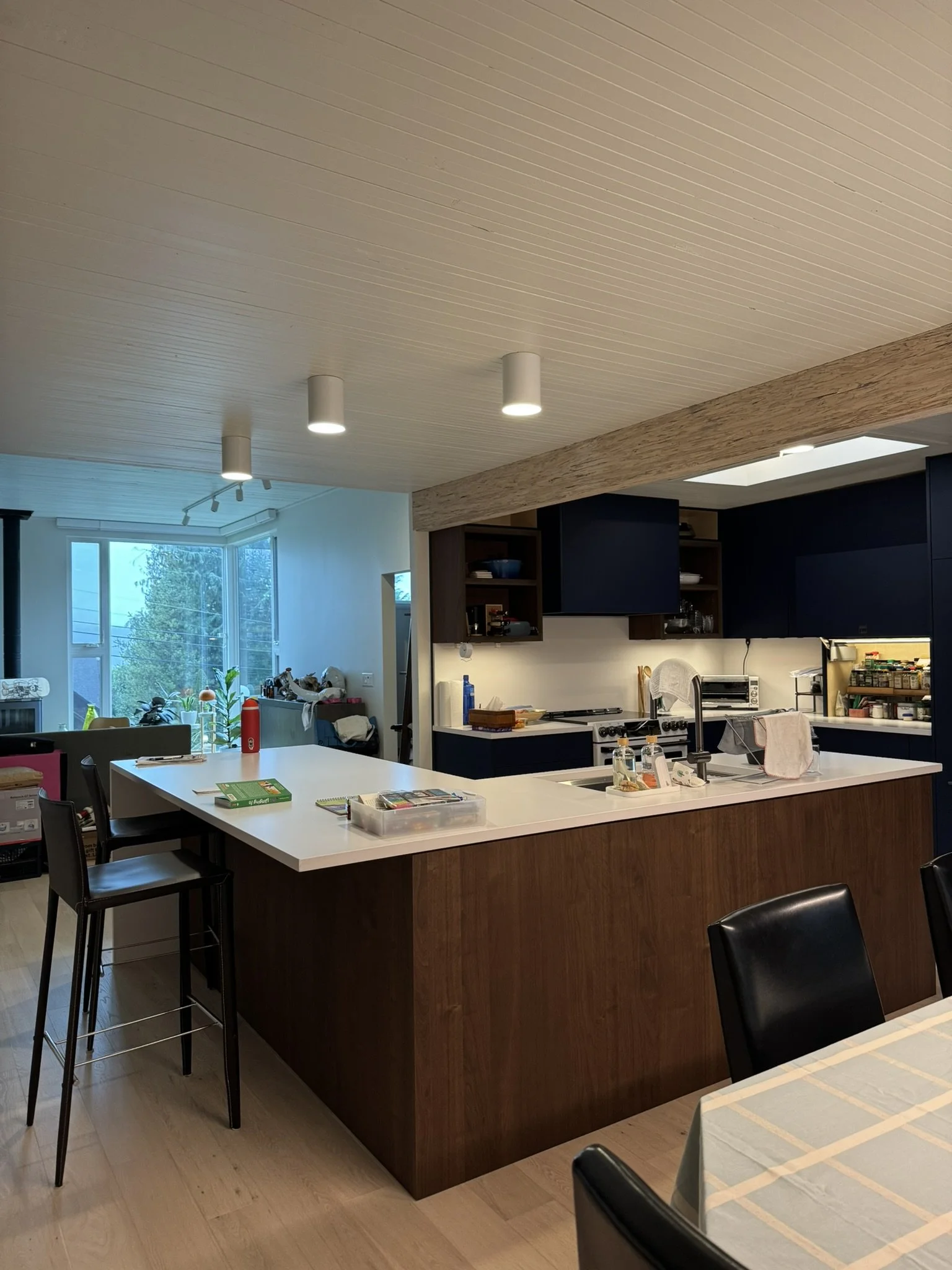
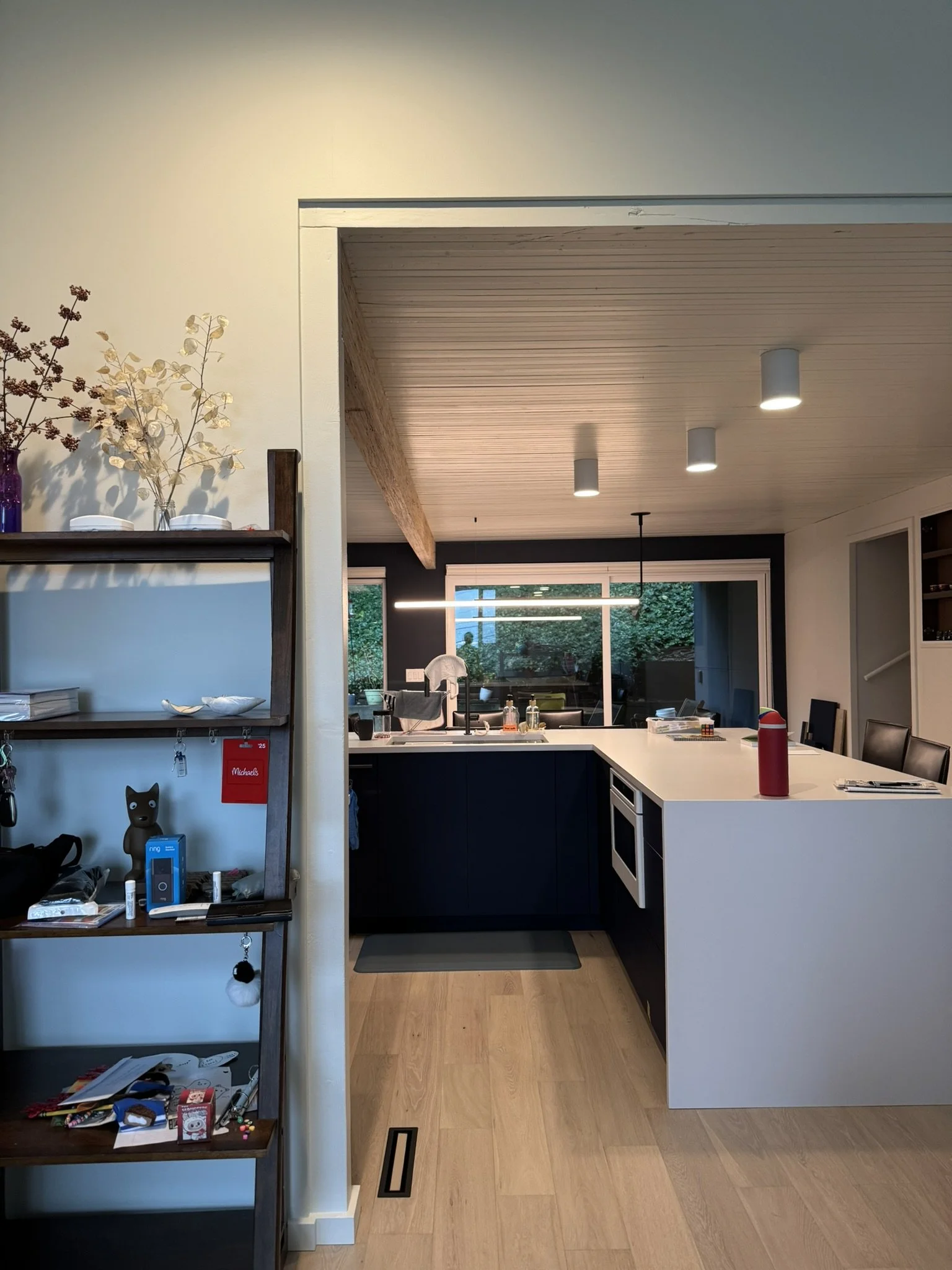
We opened the kitchen toward the water and toward the living space. We made the kitchen wider so when you’re standing at the range cooking, you’re at the center of the home and can see out towards Fox Island, turn to your kids at the bar, and turn around and in a step put that home cooked meal on the dining table. That meant structural work — understanding what was load-bearing, designing the beam solution that made the opening possible without compromising the house. And for a box-on–box architect-designed house from the 1950’s, it had a lot of unusual structural decisions to work around.
We reorganized how the kitchen actually works: where food is prepped, where people gather while someone cooks, how the space flows toward the deck and outdoor living. Light changed. The view came in. Daylight from different directions paints the room differently throughout the day. The cook stopped being alone.
“They communicate more freely now. They enjoy each other’s company more. A room changed and a family dynamic shifted with it.”
What Changed
The practical outcomes were real; better light, better flow, a kitchen that finally justified those views. But the outcome that mattered most to that family was something else.
That's what good kitchen design actually does when it's working. Not just solve the spatial problem, but solve the life problem underneath it.
What Most Homeowners Don't Know Before They Start
A kitchen remodel that looks simple on the surface rarely is. The moment you open walls, you're in the territory of structural changes, electrical upgrades, ventilation requirements, and permit triggers — all of which affect your timeline and budget in ways that aren't obvious until you're already in it.
Permits
In Pierce County, kitchen work that touches plumbing, electrical, or structural elements will trigger permits. That's not a problem; it's just a reality that needs to be planned for from the beginning, not discovered mid-demo when your contractor is already on site. This project was in University Place, which has its own building department. I led the permit application process and got us approved without comments right away by having complete construction drawings.
Structural
Opening a kitchen almost always means touching something structural. Understanding what's load-bearing before design starts determines what's actually possible. I work this out in the design phase so there are no structural surprises once construction begins.
How the Space Actually Works
Most kitchen layouts are designed for how a kitchen looks, not for how a specific family cooks, entertains, and moves through their home. The workflow — where prep happens, where people gather, how the kitchen connects to outdoor living — matters more than square footage.
The difference between a contractor-led remodel and an architect-led one:
A contractor starts with what you tell them you want and prices it out.
An architect starts with how you actually live and works backward to the design.
One gets you what you asked for. The other gets you what you needed.
How the Process Works
Every kitchen project I take on starts the same way — with understanding before drawing.
1. Feasibility First
The client came to me because they thought they needed an addition. During our feasibility study period, I proved that we could get everything they wanted and more with a major change of the layout, saving hundreds of thousands of dollars.
Before we talk about cabinetry or countertops, we talk about what's structurally possible, what permits will be required, and what the realistic budget range looks like for what you want to do. Most clients leave this conversation with a clearer picture than they've had since they started thinking about the remodel.
2. Design That Reflects How You Live
I ask questions most architects don't: How do you cook? Who's in the kitchen with you? Where does the party end up? What's broken about the current layout that you've just learned to live around? The design comes from those answers.
3. Coordination Through Construction
I stay involved as the project moves into construction. When something unexpected comes up — and something always does — you have someone in your corner who knows the design intent and can make a real-time call that protects it.
Who I Work With
I work with homeowners in University Place, Fox Island, Gig Harbor, Tacoma, and the broader Pacific Northwest who are planning a significant kitchen remodel or addition; not a cosmetic refresh. Projects where the layout itself needs to change. Where the kitchen's relationship to the rest of the house needs to change.
If you're considering whether your project needs an architect, the honest answer is: if you're opening walls, changing the structural footprint, or trying to solve a problem with how you actually live in the space…it does.
Start With a Conversation
Not sure if your kitchen project needs an architect? That's a reasonable question and a good place to start. Tell me what you're working with — the space, what's broken about it, what you're hoping for. We'll figure it out from there.