The "Thanksgiving Test": Designing a Hood Canal Retreat for 2 People... and 20.
“The house is a machine for living in.” — Le Corbusier
“Yes, but it must also be a machine for feeling.” — Me (apologies to Corbusier)
I’ve been thinking a lot about the "accordion" lately. Not the instrument, but the concept of expansion and contraction.
Most clients come to me with a conflict of visions. On one hand, they want a sanctuary; imagine a quiet place in Seabeck or Hood Canal to escape the noise of Bellevue, drink wine by the fire, and read a book in total silence.
On the other hand, they want a Legacy. They want the "Thanksgiving House"—the place where the kids, the grandkids, and the dogs all crash for the holidays.
The Problem of the Empty Hotel The danger of building for Thanksgiving is that for the other 360 days of the year, you are living in a house designed for 20 people.
I’ve toured these homes. You walk into a living room with 18-foot ceilings and three sofas, and if you are just one couple, it doesn't feel luxurious. It feels cavernous. You feel small. It’s the "Empty Hotel" syndrome. Conversely, if you design a cozy cabin for two, Thanksgiving becomes a claustrophobic nightmare of air mattresses in the hallway.
THE ACCORDION HOUSE
The solution isn't to build bigger. It's to build smarter zones that breathe.
In architecture, we talk about "Compression and Expansion." Frank Lloyd Wright was a master of this—lowering the ceiling in an entryway (compression) so that when you walked into the living room (expansion), the space felt explosive and grand.
We can apply this same logic to occupancy.
The "Away Room"
Imagine solving the "Grandkids vs. Reading" conflict not with walls, but with acoustics. Picture an "Away Room" - a smaller, acoustically separated snug off the main great room.
When it’s just the couple, this is the TV room or library. It’s cozy. It holds heat. It feels like a hug. When the family arrives, the sliding panels open up, and it becomes the "Kids' Zone" or the "Whisky Room," visually connected to the party but acoustically dampened so grandpa can actually hear the conversation at dinner.
The Mud Hall (The Decontamination Zone)
If you are building on the water, you aren't just managing people; you are managing the elements.
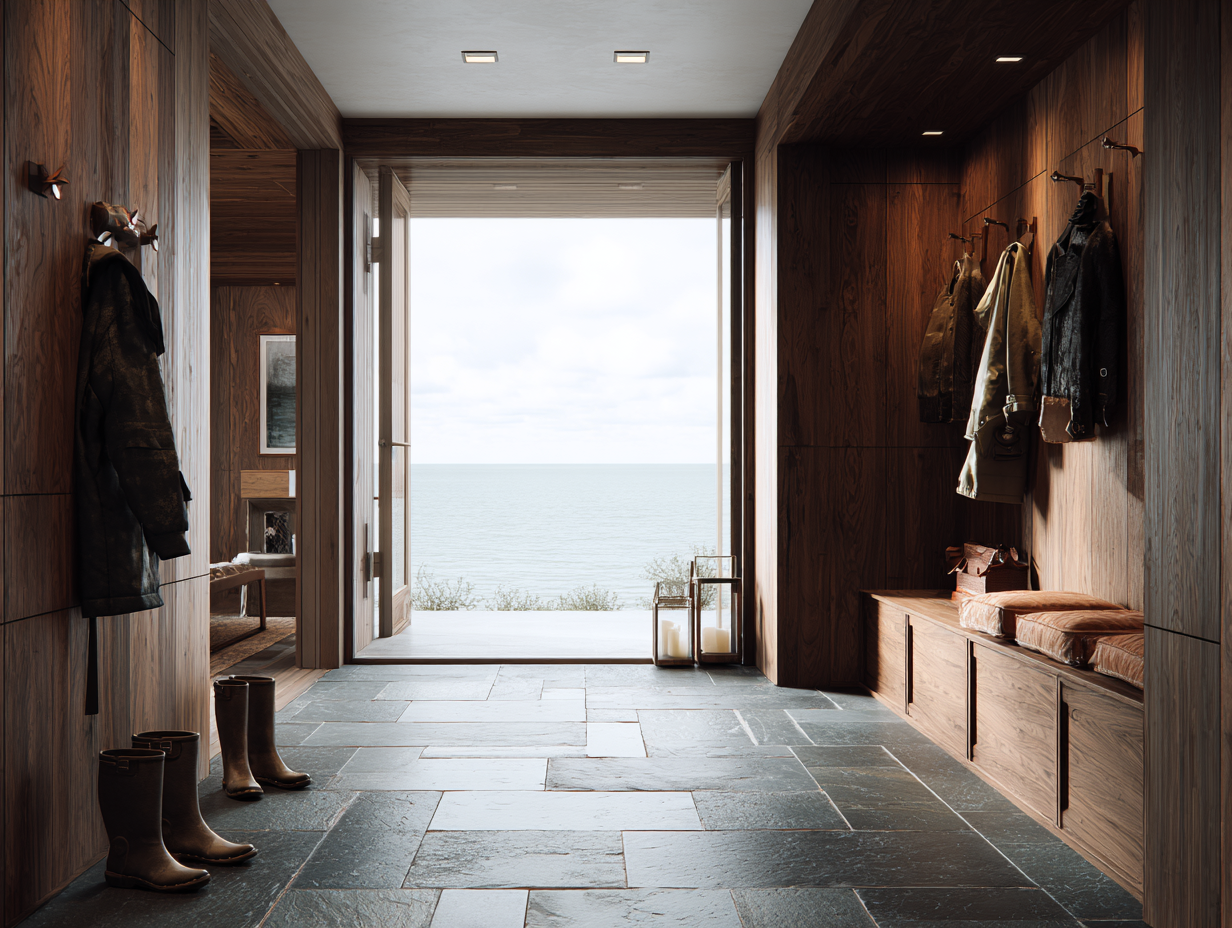
City architects design "Foyers." Rural architects design "Decontamination Zones." Real luxury in the Pacific Northwest isn't a marble floor; it’s a Mud Hall with a heated slate floor where wet dogs, sandy boots, and oyster buckets can be sprayed down before they ever touch the walnut floors of the living room. It’s the airlock between the wild outdoors and the civilized interior.
A HOUSE THAT BREATHES
I often think back to the St. Ignatius Chapel in Seattle: how it feels cozy for one student praying in a corner, yet grand enough for a full Sunday service. It adapts to the human spirit, not the other way around.
Your retreat should do the same. It should wrap around you when you are alone, and open its arms when the family arrives.
Thinking about your own legacy project? Don't start drawing floor plans yet. Start by defining how you want to live in both the quiet moments and the loud ones.
Download your Home Planner to help you ask the right questions before you hire an architect.