R10 Zoning in Pierce County: What It Actually Means
Updated June 2026
By Andrew Mikhael
TLDR: R10 is a rural residential zoning designation in Pierce County. The "10" refers to 10 acres — that's the base minimum lot size. Don’t worry if your lot is smaller. Most are, but you can’t do a lot split under 10 acres.
Within a subdivision, that minimum can drop to 1 acre, or 5 acres in a large lot division, as long as overall density stays within the zone's limits.
What R10 doesn't tell you is how much of that land you can actually build on. Setbacks, impervious surface caps, critical area buffers, and shoreline overlays all shrink your buildable envelope — sometimes dramatically.
On waterfront and sloped parcels especially, the gap between what a lot looks like on paper and what you can actually build is where expensive surprises happen.
The "Simple" Lot Myth
You found the perfect wooded lot or waterfront parcel. The listing says “Zoned R10 (Single Family)”. It looks buildable; miles away from those restrictive "recreational only" lots. Those are off limits for homebuilding.
But in Unincorporated Pierce County, "R10" isn't exactly a green light; it is a complex web of setbacks, critical area overlays, and surface limits. Knowing the zoning designation is just the beginning. Having the skill to maximize it is where the value lies. An amateur sees a "buildable lot". They also gravitate to the easier, rectangular lots. A pro sees a puzzle of specific constraints that can either kill your project or create a dream home.
Here is what you need to know before you close.
What does R10 Zoning mean?
R = Rural, as opposed to U for Urban. They have different limits, setbacks, etc.
10 = 10 acres, which is the minimum size lot for a NEW lot. It doesn’t mean you can’t build on a smaller one, but you can’t subdivide your R10 lot into anything smaller than 10 acres now.
1. The "Box" You Can Build In (Setbacks & Height)
The Data: On paper, R10 seems straightforward. You typically hear about a 25-foot front setback, 10-foot interior/side setback, and 15-foot rear setback. For the most part, it is what it is.
The Trap: These are general standards. Did you know that for many lots in the Gig Harbor Community Plan area created after December 2002, the rear setback can jump to 30 feet or even 50 feet? Relying on the "standard" 15-foot rule could cost you 35 feet of your backyard. Oddly shaped sites and a slew of critical areas could impede on the setback, not to mention otherwise invisible restrictions that come up too late for the unaware.
The Height Limit: You generally have a 35 to 40-foot height limit. A 40-foot height limit sounds generous, until you realize how slope calculations affect where that 40 feet is measured from.
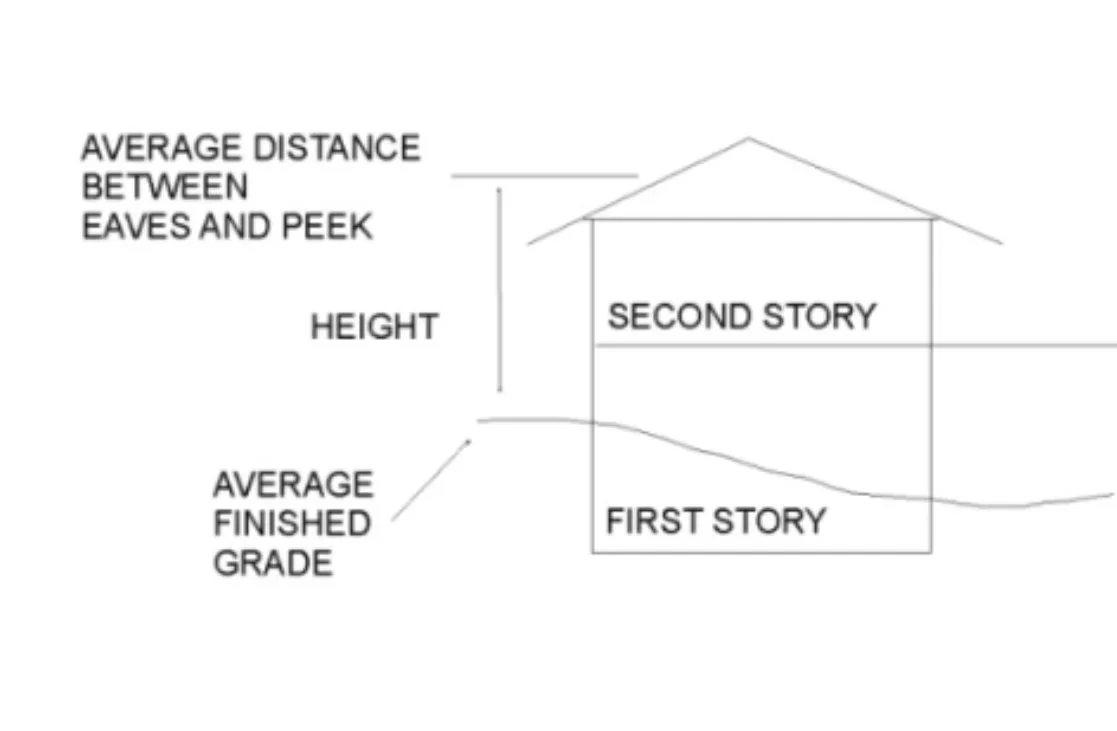
Zoning Height Calculation
When it comes to zoning, height calculations aren’t as straightforward as you might think. It is a moving target depending on the slope of your land and your roofline.
If you are on a slope (which is most of Gig Harbor and Fox Island), the county doesn't measure from the highest point of your foundation. They often measure from "average grade." A standard box design might violate the height limit on the downhill side, whereas a custom stepped design maximizes the view volume legally. Don't just look at the footprint; look at the 3D volume allowed.
2. The "Invisible" Cap: Impervious Surface Limits
This is the #1 shock for new buyers. New ordinances regarding Aquifer Recharge Areas (which cover huge swaths of Gig Harbor) can limit your "impervious surface" (house + driveway + patio) to just 10% of the lot size.
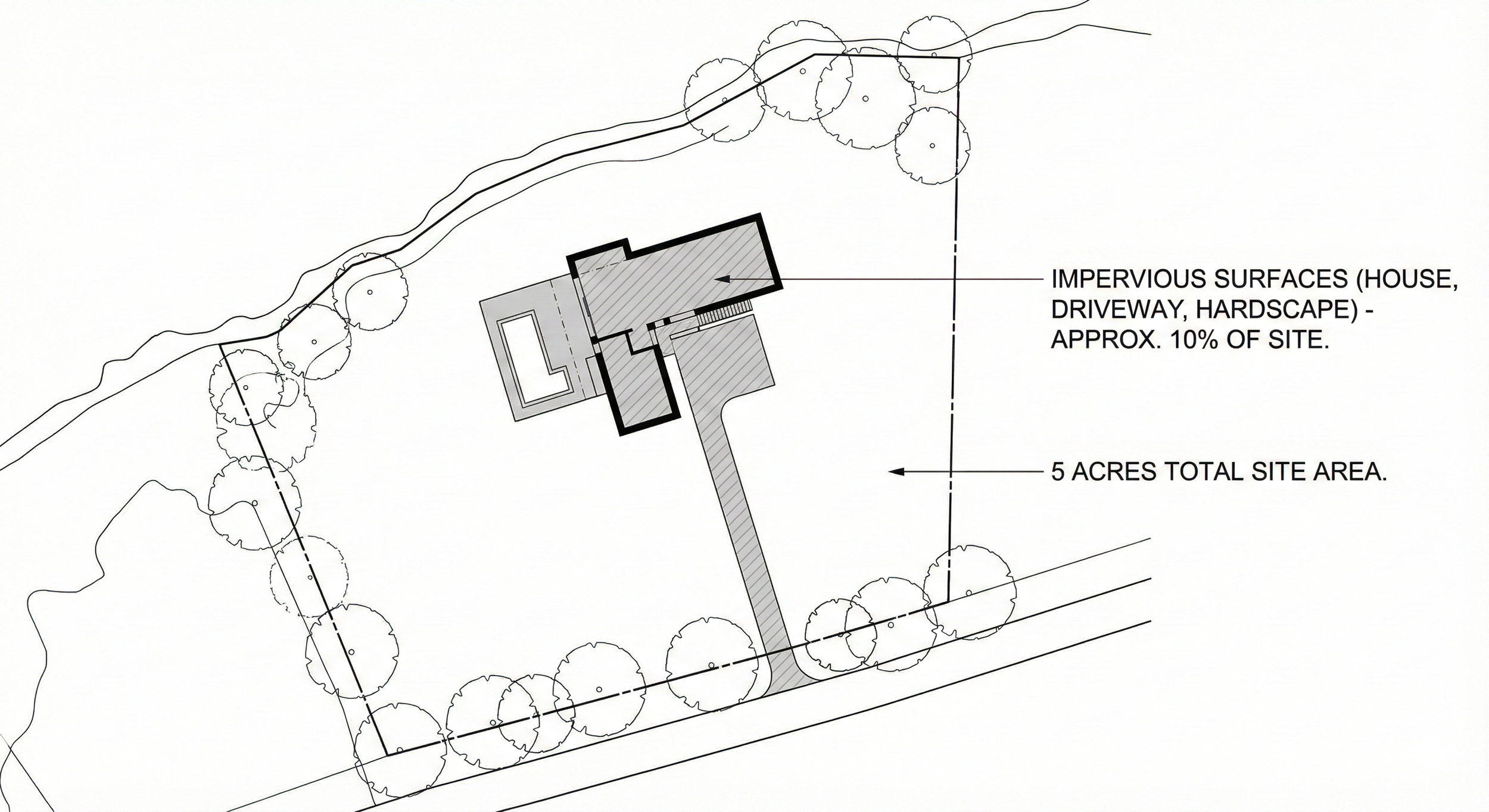
DIAGRAM: Impervious Surface Ratio / Lot Coverage
On a smaller R10 lot, a long winding driveway might eat up your entire allowance, leaving no room for the sprawling ranch house you envisioned.
The "Pro" Nuance:
It isn't just Aquifer Recharge Areas. Your property might have specific overlays that change where you can place that impervious surface.
• The Exception: Did you know additions under 500 sq ft might be exempt from site development permits?
• The Loophole: Projects between 500-2,500 sq ft often qualify for "abbreviated site plans" that navigate these limits differently.
If you can find the right way to place these structures on site—perhaps using permeable pavers or strategic clustering—you can secure your dream home without depriving yourself of future opportunities to build an addition.
3. The "Legacy" Opportunity: The New ADU Rules
Pierce County recently relaxed ADU (Accessory Dwelling Unit) rules in a massive way.
• Size: You can now build up to 1,250 sq ft in rural zones like R10 (previously capped much lower).
• Freedom: Owner occupancy is no longer required, and you can now place the ADU in the front yard.
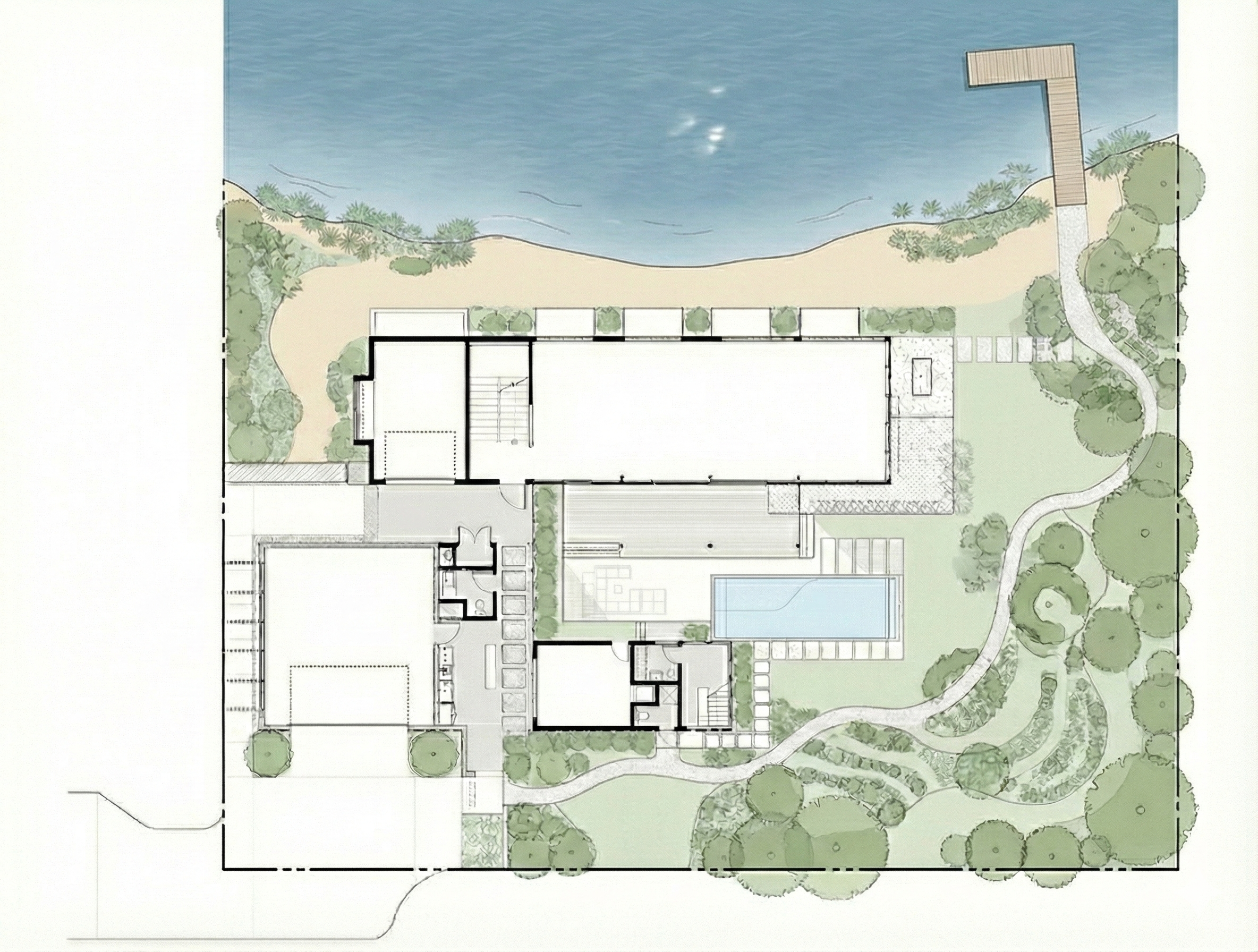
NEW ADU Rule In Pierce County
ADU’s can be in front of the main house now, freeing waterfront properties to have the main house face the water without penalty.
The Opportunity: This is a huge advantage for waterfront properties. Historically, you would have been forced to squeeze an ADU between your primary house and the water (ruining your view). Now, we can place a luxury guest cottage near the road, preserving your privacy and view.
The Reality Check: While the zoning allows it, the septic often fights it. Adding a 1,250 sq ft guest house triggers a requirement for a new septic system or expansion. We often design ADUs over detached garages to maximize height (allowed up to 25ft or one story above the garage), but we always run the septic math first.
4. The "Deal Breaker" Map: Critical Areas & Hazards
Many R10 lots in our region are flagged for Landslide Hazards or Erosion Hazards. If your slope exceeds 40%, you might face a mandatory 65-foot buffer where you cannot build.
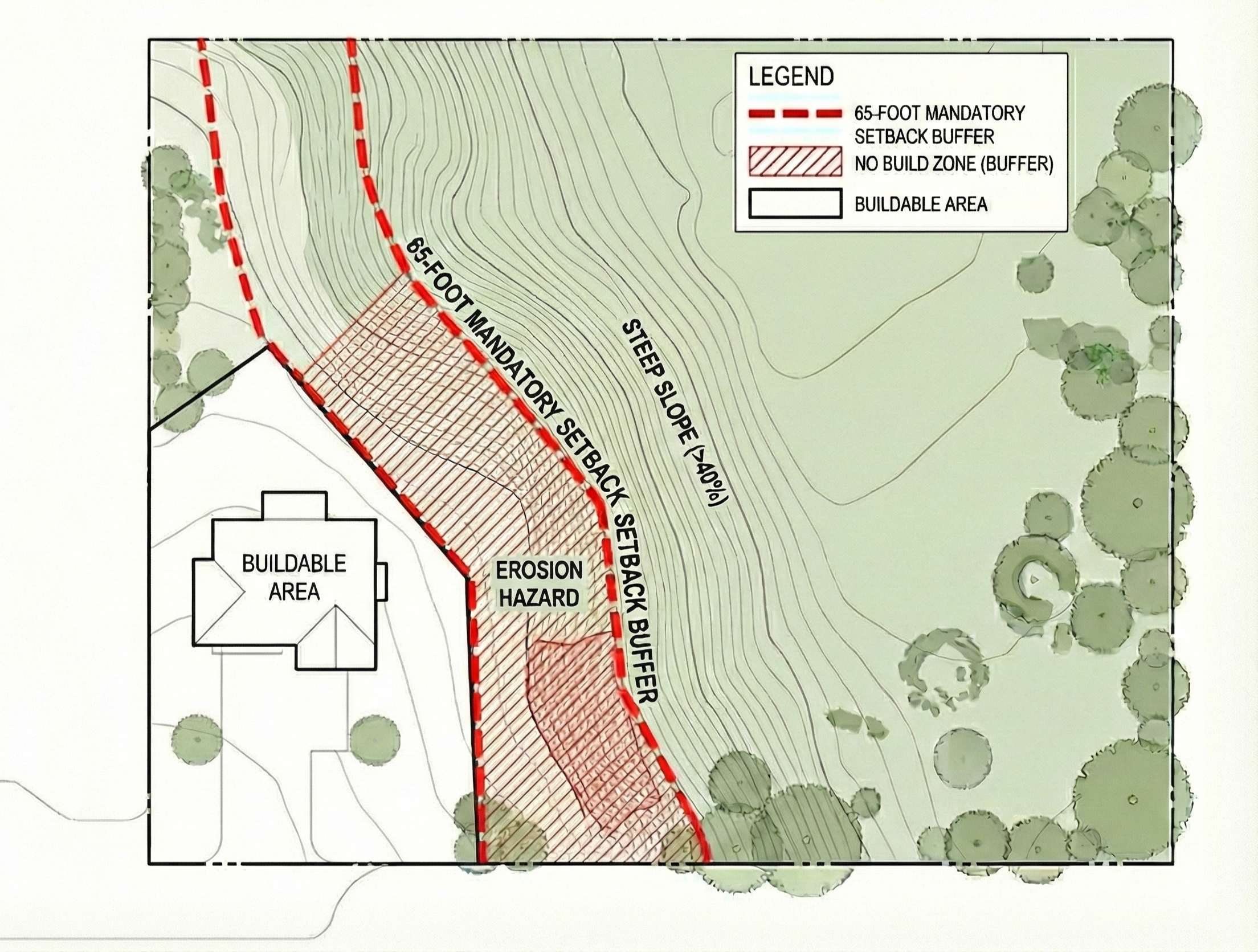
Steep Slope Setback Buffer
The "Pro" Solution: Just because a map says "Hazard" doesn't mean the lot is dead. A map is a general instrument; your lot is specific reality.
• We work with geotechnical engineers to prove that specific setbacks don't apply to your specific building footprint.
• We collaborate with County Officials who ultimately make the decisions to negotiate what will stick and what won’t.
Don't Buy a Lemon. Buy a Plan.
R10 zoning offers incredible potential for custom homes, but the "Critical Area" and "Impervious Surface" rules catch homeowners off guard every month.
You don't need to memorize the code. You need to visualize the envelope.
The Next Step: Book a Site Feasibility Call. We’ll look at your lot’s specific zoning constraints and give you a "Go/No-Go" assessment before you commit.