Building a Custom Home in Gig Harbor: What to Figure Out Before You Design

Updated March 2026
TLDR Gig Harbor lots come with real constraints — waterfront setbacks, steep slopes, septic questions, critical area buffers. Most of them are workable. But they need to be understood before design begins, not after you've already fallen in love with a floor plan.
Most people planning a custom home in Gig Harbor start with a property search and a Pinterest board. That's a reasonable place to start. The problem is the gap between what you're imagining and what a specific lot will actually allow.
Pierce County has its own rules. Gig Harbor adds a layer on top of that. Waterfront properties trigger shoreline setbacks and critical area reviews. Steep lots bring geotechnical requirements. A lot of parcels here aren't on sewer, which means septic feasibility becomes a real design constraint — not an afterthought.
None of that makes Gig Harbor hard to build in. It makes it a place where the order of operations matters.
Why does Gig Harbor have different constraints than other areas?
The short answer: geography and jurisdiction.
Most lots in Gig Harbor, Fox Island, and the Key Peninsula involve at least one of the following: steep topography, proximity to water, native growth protection areas, or lack of municipal sewer. Pierce County's critical areas ordinance governs all of them. Waterfront properties trigger the Shoreline Management Act on top of that.
None of this is unusual for the South Sound. It's just specific. An architect who hasn't worked in Pierce County before will spend months learning what an experienced local already knows — at your expense.
How do you know what's actually possible before you start designing?
You run feasibility before design begins.
That means pulling zoning data, checking setbacks and height limits, understanding septic capacity if you're off sewer, mapping any easements or protected areas on the parcel, and getting a realistic cost range before you commit to a design direction.
It takes a few weeks. It prevents the much worse version of events — where you spend months on a design, fall in love with it, and then discover the site won't permit what you've drawn.
I had a client on the Key Peninsula who bought land before we talked. Good price, water views, everything looked right from the listing. What the listing didn't say was that the buildable area was about a third of what the total acreage suggested, once you accounted for shoreline setbacks and a steep slope buffer. We found a configuration that worked. But if they'd started design before running feasibility, they'd have designed something that couldn't be built.
That's not a horror story. It's just what happens when site analysis gets skipped.
Should I remodel my existing home or build new in Gig Harbor?
It depends on the structure and the lot — but the decision usually comes down to a few things.
If you love where you are and the existing structure is sound, remodeling is often the better path. You're already permitted, already sited, already on utilities. The work is figuring out what stays, what changes, and how to sequence construction so you're not displaced longer than necessary.
If the house is a poor fit for the lot — wrong orientation, too small to expand within setbacks, aging systems throughout — new construction starts to make more sense. But that math needs to be run explicitly, not assumed.
The answer I give most often: before you commit to either path, do the analysis. A few weeks of feasibility work on the front end is a lot less expensive than a change order six months into construction.
What does working with an architect in Gig Harbor actually look like?
It starts with understanding what's possible, not with drawing.
Once feasibility is done, design begins with how you actually live — how you use your home, what doesn't work about your current one, what you want to feel when you walk in. That shapes everything from layout to orientation to how the house sits on the lot.
From there, it moves into permitting, which in Pierce County includes building department review, and on waterfront properties, shoreline substantial development permits. I coordinate with structural engineers, geotechnical engineers when slopes are involved, and septic designers when you're off sewer. I stay involved through construction to make sure what gets built matches what was designed.
A lot of architects hand off drawings and disappear. The decisions that get made during construction — when a subcontractor proposes a shortcut, when something in the field doesn't match the plans — those are moments when oversight matters.
What should I do first if I'm thinking about building in Gig Harbor?
Start with the site, not the design.
If you already own land, get it analyzed before committing to any design direction. If you're still looking, bring an architect into the search — not to do design work, but to tell you what a parcel will and won't support before you close.
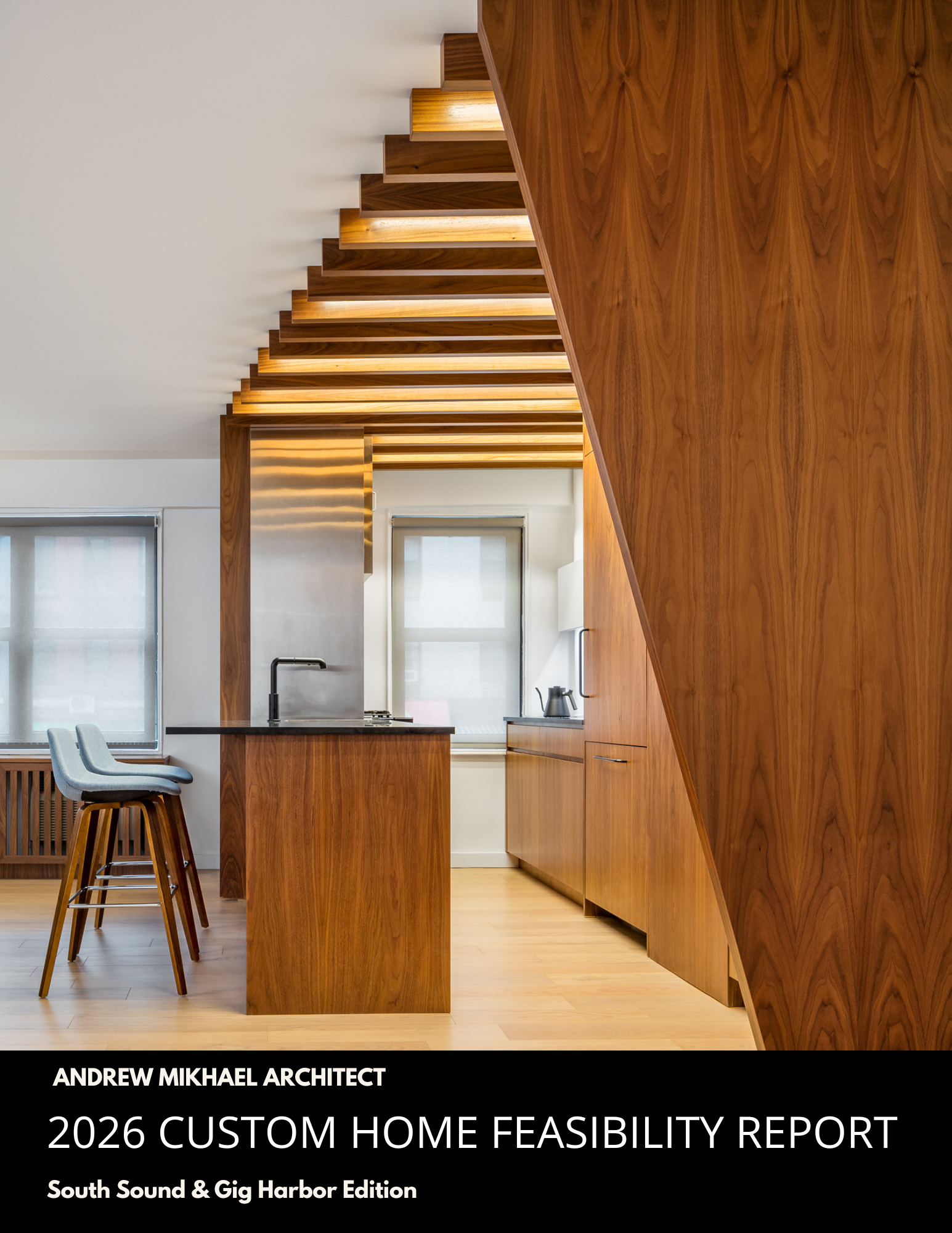
If you want a structured starting point, the Site Validation Report is where most of my Gig Harbor clients begin. It covers zoning, setbacks, site constraints, and a realistic range of what your project could cost — before design begins.
Not ready for that yet? The Custom Home Feasibility Guide walks through what to think about before you start.
Andrew Mikhael is a licensed architect based on Fox Island, serving Gig Harbor, the Key Peninsula, and the South Sound. He specializes in custom homes and major remodels on complex sites.