Designing Custom Homes in Gig Harbor, Fox Island & the South Sound
Gig Harbor Architect
Gig Harbor is one of the most desirable places to live in the Pacific Northwest. It's also one of the most complex places to build. Waterfront setbacks, steep slopes, septic constraints, gas line easements, critical area overlays — the regulatory environment here has more moving parts than most homeowners realize going in.
I've worked with homeowners across this peninsula on custom homes, major remodels, and site validations. My job is to understand what's actually possible on your specific property before you spend money finding out what isn't.
“I’d be a drowning man sinking slowly into the deep, were you not there as my giant life preserver.”
A Bathroom on Horsehead Bay That Almost Missed Its Own View
A homeowner in Gig Harbor had a master bathroom with a direct view of Horsehead Bay. The problem wasn't the view — it was that the room had no relationship to it. The existing layout felt cramped and disconnected from the setting, like someone had designed a generic bathroom and then placed it somewhere extraordinary by accident.
The structural constraints were real. The existing layout had been built in a way that didn't leave obvious room to reconfigure. Budget was finite. And the client had a clear sense of how they wanted to live in the space — specific materials, specific light, a specific feeling that the original room never delivered.
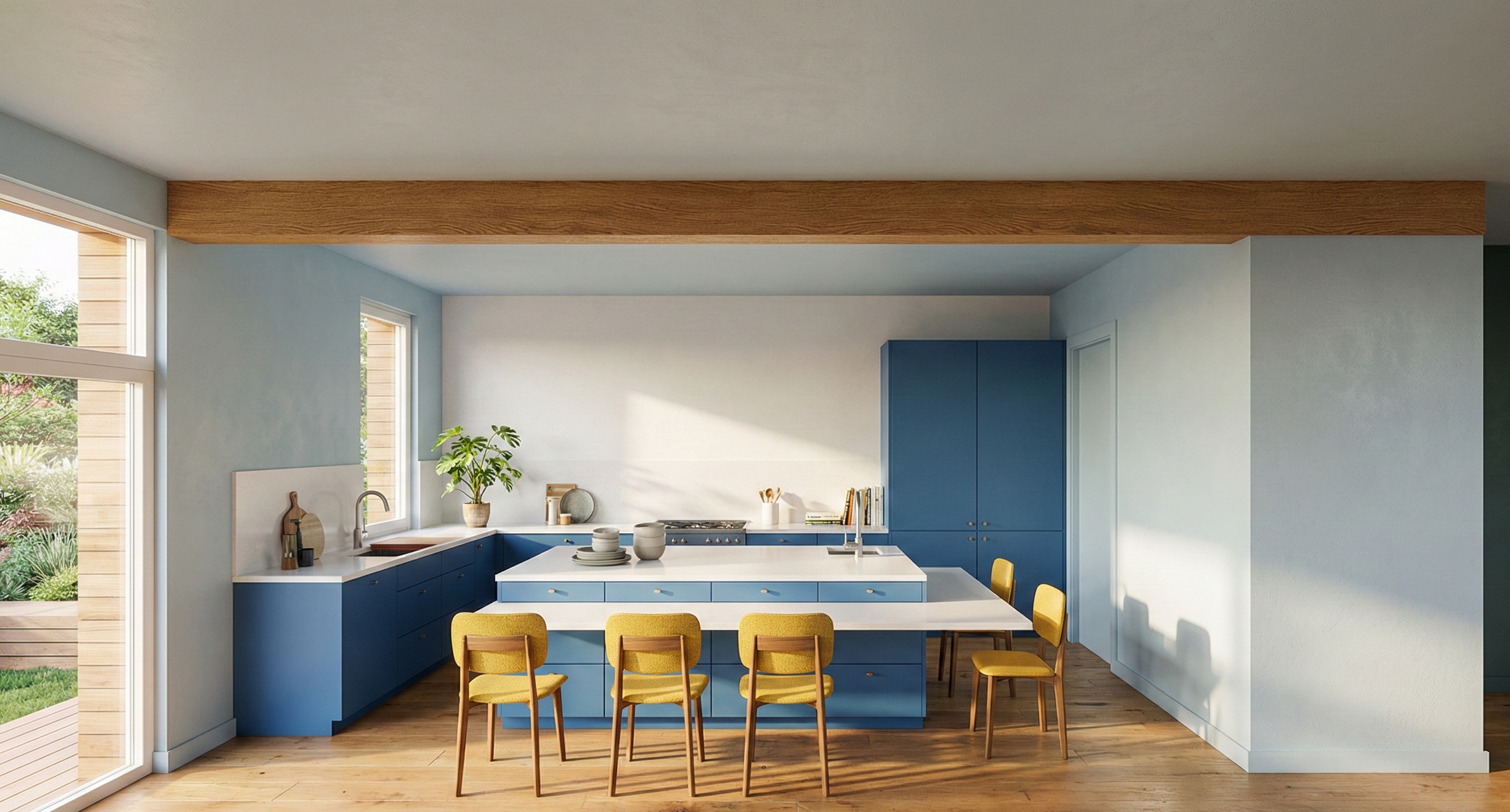
The renderings we developed worked around the structural reality while opening the room toward the bay. High-end finishes chosen for how they read in that specific light — morning sun off the water, the grey-green of Horsehead Bay in winter. The project is on hold, but the design solved what the original room never did.
The lesson for any Gig Harbor remodel: the constraints are real, but they're workable. You just have to know what they are before you design around them.
What You Don't Know About Your Property Until Someone Looks
A homeowner came to me with land they'd owned for years. They had a clear picture of where the house would go. The site felt straightforward — they'd lived adjacent to it long enough to feel confident about what was possible.
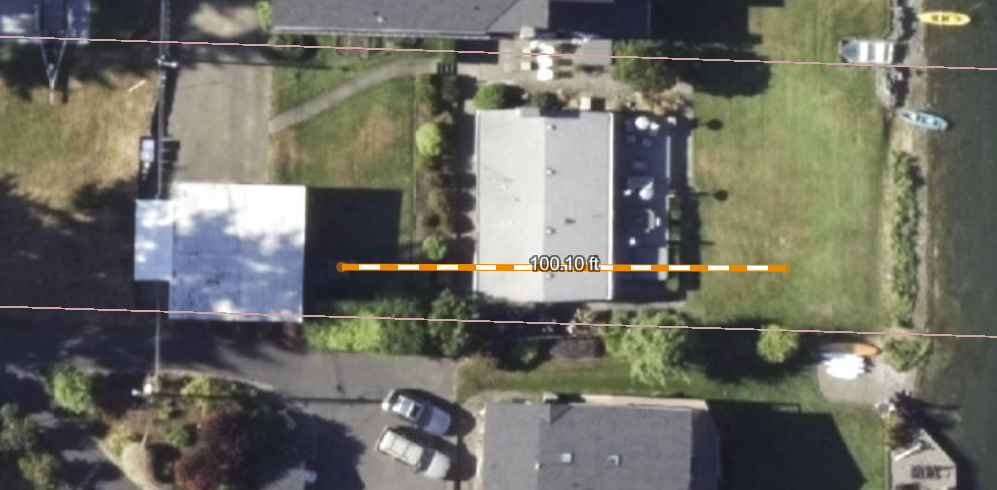
During the site validation, I pulled the overlapping regulatory layers: setbacks, easements, utility corridors. That's when we found the gas line. Not a minor one. It ran directly through the build zone they'd assumed was clear, and its location wasn't immediately obvious from a standard property review.
They'd owned the land for years. Nobody had ever mapped where the gas line actually ran.
The design had to shift. It wasn't a disaster — but it would have been one discovered six months into drawings without a site validation first. We found it early, redesigned around it, and the project moved forward on solid footing.
This is what site validation does. It's not about finding problems to scare you. It's about finding them when they're still cheap to solve.
Why Gig Harbor Requires Local Knowledge
Most of the complexity in this area comes from layers of regulation that stack on top of each other in ways that aren't obvious from a property listing or a site visit.
Waterfront Setbacks
Pierce County's shoreline management rules set minimum distances from the ordinary high water mark — and those distances vary by shoreline designation. A property that looks buildable right up to the view corridor often isn't. The setback determines where your house can actually sit, which determines everything else.
Septic System Constraints
Much of Gig Harbor, Fox Island, and the surrounding peninsula isn't on municipal sewer. Septic system placement — both the existing tank and the drain field — constrains where structures can go and how large they can be. On smaller lots or sloped terrain, this isn't a detail. It's a fundamental shaping force on the design.
Steep Slopes and Critical Areas
Gig Harbor's topography is part of what makes it beautiful. It also triggers critical area regulations on many properties — setbacks from slopes, geotechnical requirements, limitations on impervious surface. These aren't insurmountable, but they have to be understood before design begins, not after.
Utility Easements and Corridors
Gas lines, power easements, and utility corridors run through more properties than owners realize. They don't always show up in the places you'd expect, and they constrain where structures can be placed. A site validation maps them before they become a design problem.
Zoning and Lot Coverage
Pierce County zoning sets limits on how much of a lot can be covered by structures and impervious surface. On waterfront and view properties, these limits interact with setbacks to create a build envelope that's often smaller than it appears. Understanding that envelope before design starts prevents the expensive experience of designing something that can't be permitted.
What I Work On in Gig Harbor
My focus in this area is on projects where the site itself is part of the design problem — where the constraints, the views, and the way a family actually lives all need to be held together from the beginning.
• Custom homes on raw land — working through feasibility and site validation before a single line is drawn
• Major remodels of existing homes — understanding structural and regulatory constraints before redesigning how a home works
• Waterfront properties — designing for the view, the setbacks, and the specific light and weather of this peninsula
• ADUs and accessory structures — navigating lot coverage, septic, and zoning to find what's actually buildable
• High-end kitchen and bath renovations — solving spatial and structural problems in homes that deserve better than a cosmetic refresh
Every project in this area starts the same way: with a clear picture of what the site will and won't allow before design begins. That's not a delay — it's what makes the design possible.
How It Starts
For most Gig Harbor projects — especially on waterfront or sloped land — I recommend starting with a site validation. This is a focused review of your specific property: setbacks, easements, utility constraints, zoning limits, septic placement, critical area overlays. You get a clear picture of your actual build envelope and the regulatory reality before committing to design.
It's the most efficient thing you can do at the start of a project. It takes a fraction of the time and cost of discovering constraints mid-design.
Feasibility Conversation
If you're earlier in the process — still thinking through whether to build, remodel, or buy a different property — start with a conversation. Bring what you have: the address, a rough sense of what you want to do, whatever questions are keeping you up at night. We'll work through what's realistic before you make any commitments.
Let's Figure Out What's Possible
If you're planning a custom home, major remodel, or significant renovation in Gig Harbor, Fox Island, or the South Sound, the best first step is understanding your site before you fall in love with a design that can't be built.
Start with a conversation. Bring your questions, your address, or just a sense of what you're hoping for. We'll work through the rest together.
No commitment. One thing I do ask: if there's a significant other involved in the project, I'd love to have them on the call too — even if you're the lead. There's too much good information to play telephone, and everyone needs to have their say.